In this edition we’ll get to know a 3D printing lab inside the Politecnico di Milano that is working hand in hand with patients suffering from different rheumatic diseases and how Parametric Design has helped them create tools that allow these patients to have a better quality of life.
- Tell us a bit about yourself, your background and how you ended up with this project:
Sure, my name is Michele Tonizzooffline. I’ve been forged in the Architecture Faculty of the Politecnico di Milano University, where design is intended as a process, independent of scale or function, and where truly the building part of a design is as important as the design itself.
I’ve experienced the potential of computational design and 3D printing as I was working for REX in New York, helping with the design of the Necklace Residence and the World Trade Center PAC.
But it’s from a fortuitous encounter that I’ve met Marinella Levi and the +LAB team, while setting up an exhibition about the structural analysis of Uncle Scrooge’s Money Bin.
– What is +LAB? Who is it for?
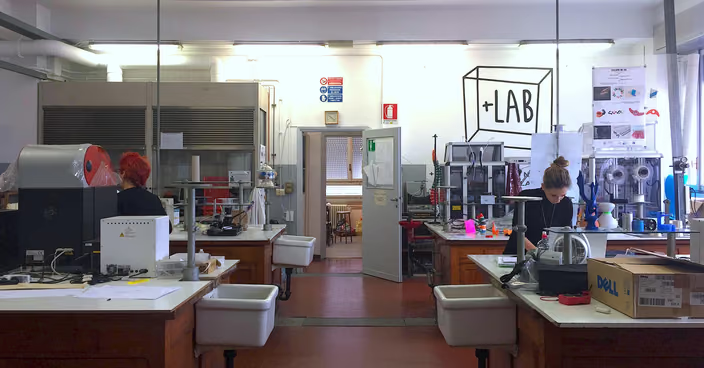
+LAB is the 3D printing laboratory of the Politecnico di Milano University and it’s located in the “Giulio Natta” building.
The lab has been active since November ’13 when Marinella and he collaborators started to employ engineers, designers, researchers and makers, to obtain a multidisciplinary approach to 3D printing.
Since the beginning, +LAB has always been involved in projects involved with helping people suffering from different illnesses such as the Rheumatic Disease, and found in 3D printing a huge potential.
It was around March ’16 when what were just draft projects evolved into +ABILITY, where we wanted to tell stories of projects made with, and not for, patients.
– What type of work inspires you the most?
We are housed inside the very building in which Giulio Natta won the Novel Price in 1963 so there are very diverse group of engineers working here such as material, biomedical and mechatronic engineers, but we are very proud of the fact that you can also find a lot of design engineers, some architects, and a lot of makers.
Since +LAB is the most multidisciplinary laboratory of the Politecnico di Milano, inspiration comes from a wide range of sectors that are moved from the same principle: innovation.
– Tell us about your current project NNCF, how do you think your work will impact the world?
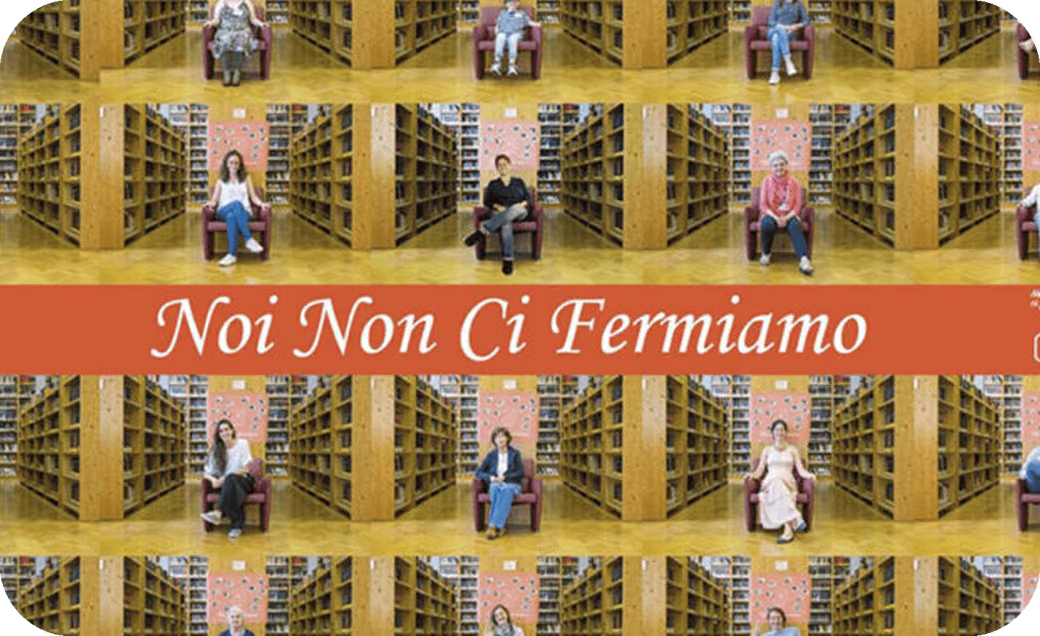
NNCF stands for Noi Non Ci Fermiamooffline (“We do not stop” in English). It started over one year ago in collaboration with Roche Pharmaceuticals and several Italian Rheumatic Diseases Associations.
As part of +ABILITY, the whole project follows one purpose: searching and finding useful applications of digital manufacturing, especially low-cost printing, and trying to solve everyday problems for people with different abilities.
The focus is mainly on Rheumatoid Arthritis, which is a disease that causes a lot of pain while doing even the simplest of everyday movements.
In order to better fulfill our users’ needs, nine people afflicted from this pathology were involved through the design process as co-designers. This allowed us to understand far better the obstacles they have to deal with instead of just reading about them.
Nine different needs were defined and, finally, nine different products. We haven’t just worked for the patients, but with their help we were the only ones that knew exactly what they needed and consequently, that made them the best team leaders.
– What was this design process like?
Throughout the whole design process, a lot of 3D models and mock-ups were developed thanks to Parametric Design and FDM technology, allowing different shapes and dimension trials until we obtained the perfect object for each co-designer.
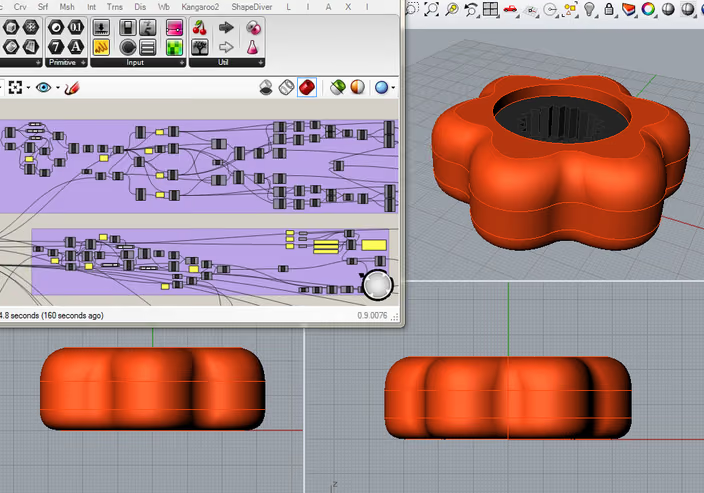
Working with a specific user was the first step for better understanding how to reach other people with the same needs through an intuitive, accessible and fast customization.
– How does +ABILITY benefit from Parametric Design?
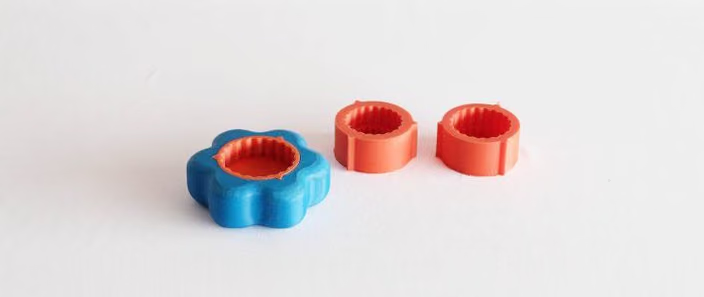
Parametric Design allows patients to customize these items in an easier way than before. By focusing on human body variables, for example hand dimensions, we have created some parametric 3D models that can easily be self-adjusted and 3D printed, with no mediators and available wherever you want. This way people can just customize their object, and either order it or download the file and print it at home.
Changes in a parameterized 3D model are easier and quicker than ones in a traditional modeling procedure. It simplifies prototyping and shape modifications during the product development phase.
3D Configurator powered by ShapeDiver: Daisy Projectoffline
- What limitations that +ABILITY currently faces do you hope will disappear in the following years?
One of the most limiting things in sharing an online customizable 3D model is the difficulty in spreading it to the right target market. Primarily, NNCF users are people afflicted by rheumatic diseases and, in most cases, they are women and/or senior people.
In some areas, Internet is only widespread across the youngest generations and not the senior population. Hopefully this will change once the new senior generations, who are more used to web media than the actual one, arrive.
- Which new technologies or tendencies excite you the most?
While we’ve embraced the 3D printing revolution, we are also very excited about the new manufacturing processes and new materials with amazing new properties that are coming out.
We believe that with the power of Parametric Design and the potential of 3D printing the manufacturing world can be opened and reach a new level where, for real, for the first time ever: if you can dream it you can do it.
That’s it for our third edition of >>Getting to know..<< Don’t forget to follow our friends from +LAB directly on their Facebook Page !
Would you like to get featured in this space? Simply send us an email to contact@shapediver.com and tell us about your project or brand! We’d love to start a conversation.
Scan-to-print
Clinics and brands run the Grasshopper definition behind their orthoses, insoles, or eyewear as a browser app: upload a scan, get a print-ready file.