Architecture, engineering & construction

Deploy your Grasshopper tools as web apps across the firm, without developers

Your computational designers already build the tools. ShapeDiver turns their Grasshopper definitions into web apps every engineer and architect can run in a browser, with safe inputs, access control, and version control, without a Rhino license or a file to pass around.

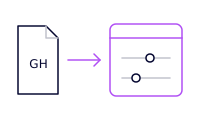
definition.ghweb app for the whole firm
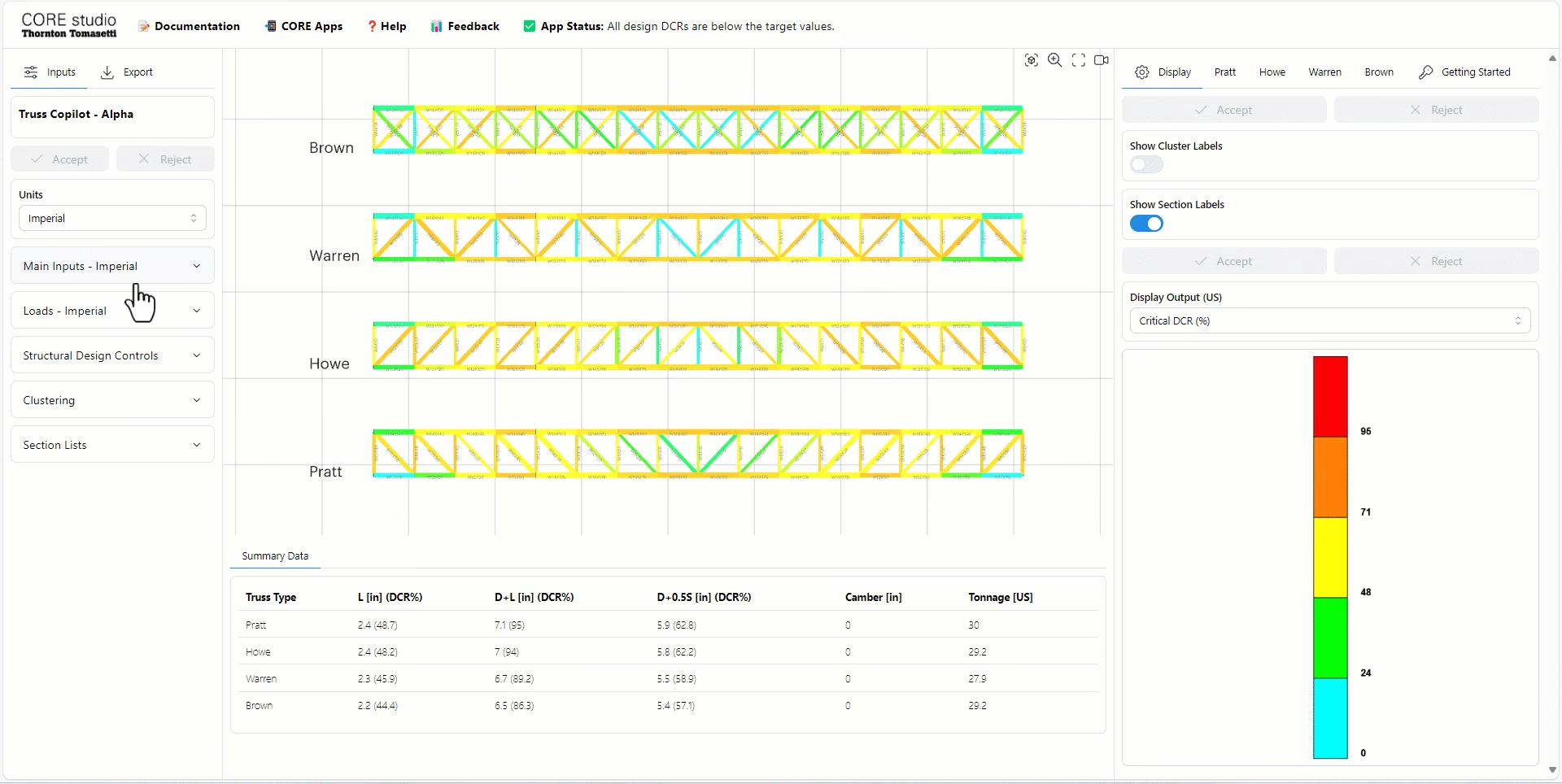
Truss Copilot: an engineer adjusts the span and other inputs in the side panel, and four truss types (Pratt, Howe, Warren, Brown) update side by side, colored by utilization, with a table of deflections and tonnage below.
Truss Copilot, an App Builder app by Thornton Tomasetti’s CORE studio.

The problem

Your computational designers shouldn’t be a queue.

In most firms, a handful of people hold the Grasshopper skills, so everyone else lines up: rerun this script, change that parameter, export that model. Every request costs an email, a file transfer, and a chance to introduce an error - and your specialists spend their days running tools for other people.

Diagram: engineers and architects send every request to a handful of computational designers, so the work queues up; each request costs an email, a file transfer, and a chance of error

How it works

Publish a definition once; the whole firm runs it

See how the platform works
  1. 01

    Build.

    Your computational designer builds the definition in Grasshopper, exactly as they do today.

  2. 02

    Publish.

    Upload it and it becomes a web app in your workspace on the platform, exposing only the inputs and outputs you choose.

  3. 03

    Govern.

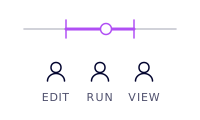
    Set safe parameter ranges, data validation, role-based access, and version control.

  4. 04

    Run anywhere.

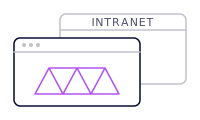
    Colleagues use it in a browser without installing Rhino or plug-ins, or you embed it in your intranet.

  5. 05

    Get outputs.

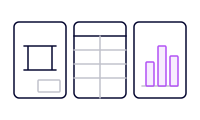
    Geometry, drawings, quantities, analysis data, and reports, generated the same way every time.

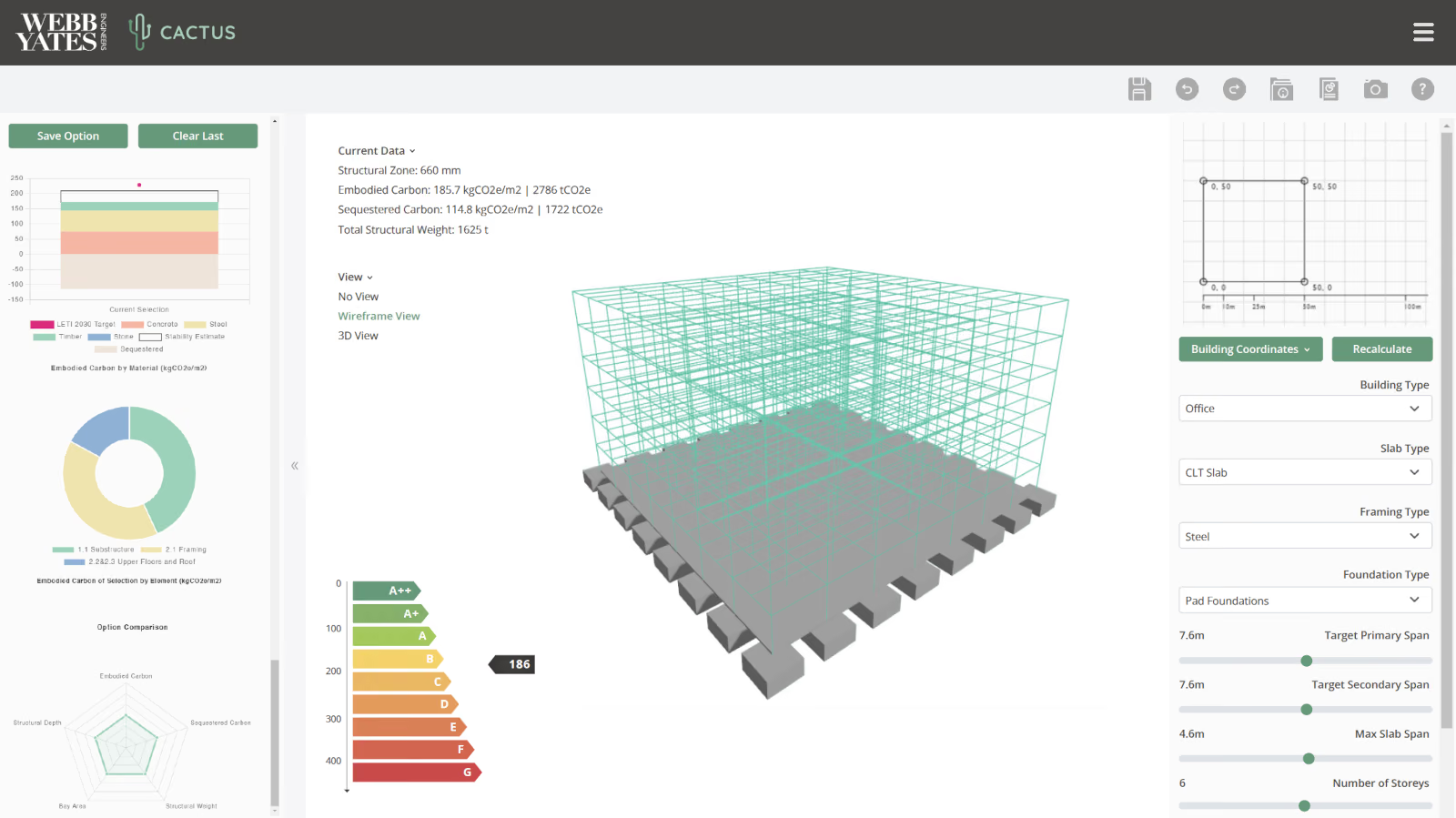
Cactus: embodied-carbon charts and a carbon rating on the left, a 3D wireframe of a building’s structural grid on its foundations in the middle, and the building type, slab, framing, foundation, spans and number of storeys to pick on the right.
Cactus, Webb Yates Engineers’ structural and embodied-carbon app, built on ShapeDiver’s viewer and backend APIs. Image courtesy of Webb Yates Engineers.

How this is different

Why firms choose ShapeDiver over hosting it themselves

Diagram: with self-hosted Rhino.Compute you build and maintain the front end, security and access, caching, load balancing and scaling, and uptime yourself; with ShapeDiver those layers are handled and you bring only your Grasshopper definition

vs. self-hosting Rhino.Compute or Hops

You can run Rhino.Compute on your own servers and call it through Hops or your own code, but then load balancing, caching, security, scaling, and the front end are all yours to build and maintain. ShapeDiver handles that. The real difference is the implementation and maintenance you no longer take on.

Read the full ShapeDiver vs Rhino.Compute comparison
vs. sharing .gh files and Rhino licenses

No installs, no license for every user, no files passed around - and because inputs are governed, a tool can’t be run out of range.

vs. building a custom web app or Python app platform

Your computational designers build the app in Grasshopper with App Builder, without a web-development team or a separate app framework to write, host, and maintain.

Your definitions and libraries stay yours - keep developing them in-house, or take them elsewhere, at any time.

What comes out

The outputs an engineering workflow needs

Geometry and models, technical drawings, quantity takeoffs, analysis and embodied-carbon data, and reports - in the formats your process needs, generated consistently on every run. For precast and offsite manufacturers, the same run can produce shop drawings, production files, and data for the ERP system. Connect to your internal systems, BIM, and tools like Speckle and Autodesk Forma through our APIs and SDKs.

Platform, APIs & integrations
Diagram: every run of one Grasshopper definition produces geometry, drawings, quantities, analysis, embodied-carbon data, and reports, which flow into internal tools, BIM, Speckle, and Autodesk Forma through the APIs and SDKs

Proof

Firms already scaling this way

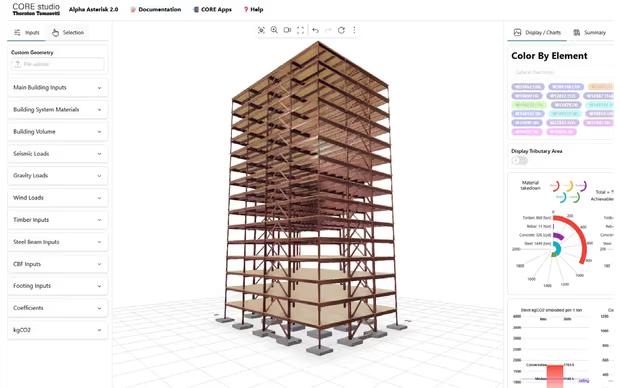
Asterisk, Thornton Tomasetti's structural design and optimization app, built on ShapeDiver
CORE studio / USA
ShapeDiver apps across the firm
30+
Estimated return, a lower bound
~7x

Their own estimate is roughly a sevenfold return, which they describe as a lower bound. Tools like their “Asterisk” platform automate member sizing, quantity takeoffs, and embodied-carbon calculations.

“Engineers no longer have to spend days or weeks running manual calculations… answers in minutes.”

Eesha Jain, Computational Designer

Read the Thornton Tomasetti storyImage courtesy of Thornton Tomasetti.

Spain

instead of 3 weeks
3 min

Automation delivered as a service: a best case of a three-minute workflow in place of a three-week manual drawing.

Read the story

Also building on ShapeDiver

balbek bureau’s RE:Ukraine Villages configurator, for rebuilding homes in war-damaged villages, covers more than 200 million possible house configurations for the Kyiv region alone.

More AEC stories

All customer stories

The business case

What changes when the whole team can run the tools

Specialists go back to building tools, and the queue disappears.

Decisions happen faster, with better visual and quantitative evidence behind them.

Governed inputs and version control keep results consistent across offices and disciplines.

The real lever

A small computational team can serve thousands of engineers - value grows with internal adoption, not headcount.

Diagram: a small computational team publishes one tool, and thousands of engineers run it

Trust & governance

Built for how firms actually work

Role-based access, safe parameter ranges, data validation, and version control keep every tool governed. Your definition stays private on our servers and is never exposed to the people using the app. Everything runs on SOC 2® Type II audited infrastructure, with cloud regions in the EU, the US, and Asia; SSO and a dedicated, isolated environment are available on Enterprise.

Security & Trust
Diagram: the platform runs on SOC 2 Type II audited infrastructure with regions in the EU, the US, and Asia, plus dedicated environments for Enterprise

Who it's for

For computational design, design technology, and BIM teams

Engineering firms, architecture practices, and contractors with a computational design team, from a five-person specialist group to a firm rolling internal tools out to thousands of colleagues. Usually a computational design or design technology lead builds the tools, and a head of digital practice or a BIM manager rolls them out.

  • 01Structural engineers
  • 02Façade engineers
  • 03Computational designers and engineers
  • 04Design technology leads
  • 05Heads of digital practice
  • 06BIM and VDC managers

Getting started

Ways to begin

Self-serve

A computational designer wants to try it.

Start a free trial, upload a definition, and share it as an app.

Enterprise

You want to roll it out across the firm.

An Enterprise deployment comes with a dedicated backend, SSO, onboarding, and an architecture review.

Not sure yet

Not sure it fits your setup.

Book a call and we’ll work through your case, including the ShapeDiver vs. Rhino.Compute comparison for your team.

No lock-in - your definitions and Grasshopper libraries stay yours.

FAQ

Questions firms ask

Do engineers and architects need Rhino or Grasshopper to use the apps?

No. The apps run in a browser; only the person who builds the tool needs Grasshopper.

How do we keep tools governed and versioned?

Safe parameter ranges, data validation, role-based access, and version control are built in.

Why not just run Rhino.Compute or Hops ourselves?

You can - but then the scaling, caching, security, and front end are yours to build and maintain. Most firms would rather their computational designers spend that time on design logic. Read the full comparison.

Can it connect to Revit, IFC, and our BIM workflow?

Through open formats and connectors, not inside Revit itself. A definition can export IFC: Construsoft’s Optinave, for example, returns IFC files for each steel structure. The Speckle connector passes geometry and data on to Revit and the other tools Speckle supports, and there is a connector for Autodesk Forma. Your internal systems connect through our APIs and SDKs.

How is this different from Dynamo Player or Speckle Automate?

Dynamo Player runs Dynamo scripts inside Revit, so everyone who uses a tool needs Revit open. ShapeDiver runs Grasshopper definitions in a browser, for people who have neither Rhino nor Revit. Speckle Automate runs functions automatically when a new model version reaches Speckle; ShapeDiver apps are interactive, and the two work together through our Speckle connector.

What about SSO and security?

SOC 2 Type II across the board; SSO and dedicated, isolated environments on Enterprise.

Can we upload our existing Grasshopper libraries?

Yes.

AEC

Put your firm’s tools in everyone’s hands

Talk to us about deploying your Grasshopper tools across the firm - or start a free trial and publish your first one today.

Talk to our team

Your Business

How can we help?